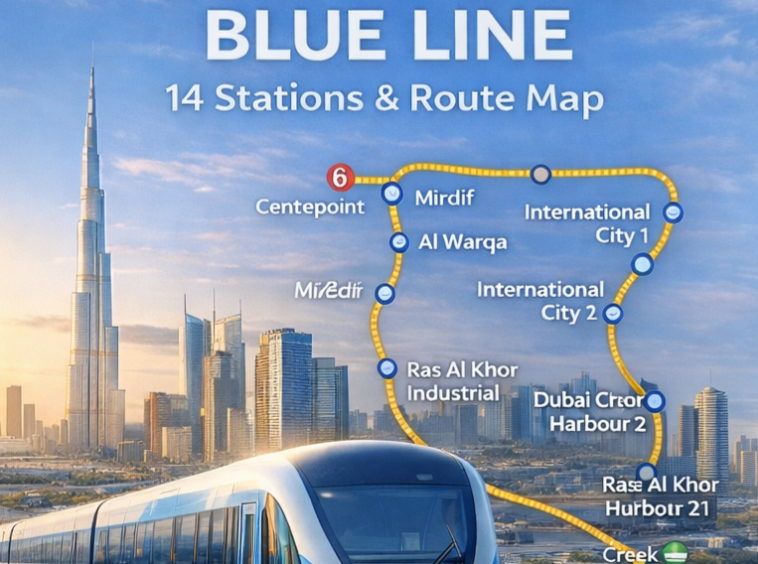
Dubai’s public transport landscape is set for a major transformation with the Dubai Metro Blue Line route guide marking one of the most ambitious mass transit projects in the city’s history. Approved by the Roads and Transport Authority (RTA), this expansion will add a brand-new metro line with 14 strategically positioned stations, significantly improving connectivity and supporting urban growth and property values across the emirate.
As Dubai continues to grow under visionary plans like the Urban Plan 2040, the Blue Line will play a central role in promoting sustainable mobility, reducing traffic congestion, and enhancing access to employment, education, and lifestyle hubs — all factors that influence real estate dynamics and investor interest.
🚇 What Is the Dubai Metro Blue Line?
The Dubai Metro Blue Line is a new third metro line under construction, designed to expand the city’s rail network by approximately 30 km with 14 stations, including interchange points with the existing Red and Green lines. The line is expected to begin operations on 9 September 2029, coinciding with the 20th anniversary of the original Dubai Metro launch.
Unlike the more radial layout of existing lines, the Blue Line follows a distinctive Y-shaped configuration, linking key residential, commercial, and academic districts to the wider metro system.
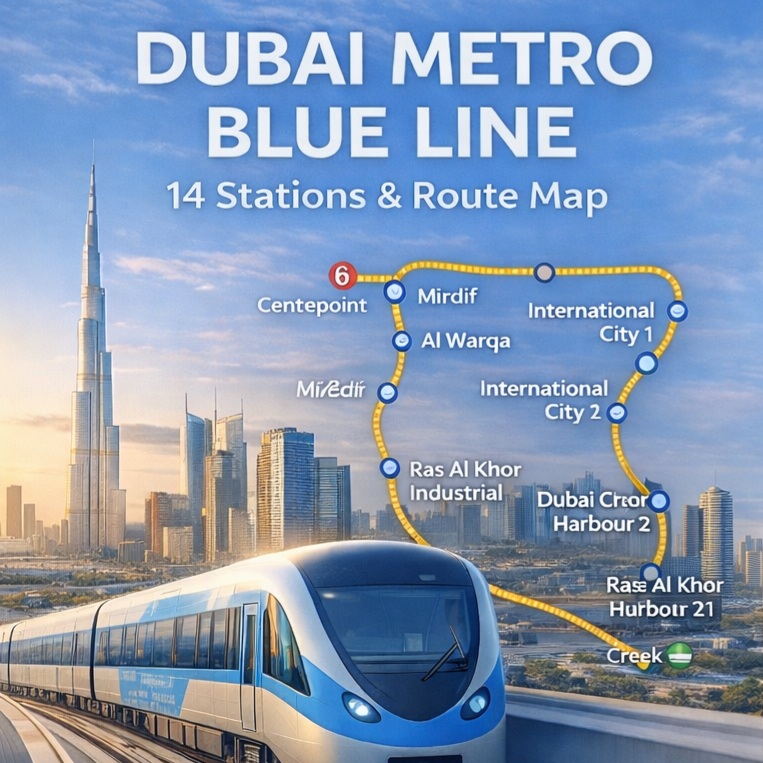
📍 Blue Line Route Overview
The Dubai Metro Blue Line comprises two interconnected branches:
🔵 Branch A — Creek to Academic City
This longer branch covers about 21 km and connects from the Creek Interchange Station (linked to the Green Line) toward Dubai Festival City, Dubai Creek Harbour, Ras Al Khor, International City, Dubai Silicon Oasis, and terminates at Dubai Academic City.
🔵 Branch B — Centrepoint to International City
This 9 km branch begins at the Centrepoint Interchange Station (linked to the Red Line at Al Rashidiya), passing through Mirdif, Al Warqa, and meeting the main branch at International City.
This Y-shaped design dramatically enhances east–west connectivity — a major addition to the existing network, which traditionally served north–south and central corridors.
📍 List of 14 Blue Line Stations
The Blue Line will serve 14 key stations (including interchange stations):
- Centrepoint Interchange Station (Red Line connection)
- Mirdif Station
- Al Warqa Station
- International City 1 (interchange point)
- International City 2
- International City 3
- Ras Al Khor Industrial
- Dubai Creek Harbour 1
- Dubai Creek Harbour 2
- Dubai Creek Harbour 3
- Dubai Festival City
- Dubai Silicon Oasis
- Dubai Academic City
- Creek Interchange Station (Green Line connection)
These stations were chosen for their strategic importance, improving transport accessibility across residential neighborhoods, business districts, and destination hubs.
🚉 Key Features & Connectivity
🔁 Seamless Interchanges
- Centrepoint Station connects with the Red Line, linking east-west commuters to the city’s core and international airport corridors.
- Creek Interchange connects with the Green Line, enabling smoother travel toward areas like DIFC, Bur Dubai, and beyond.
🌆 Urban Integration
Each Blue Line station is integrated with feeder buses, pedestrian networks, and future transport modes like e-scooters and bike lanes. This multi-modal connectivity supports Dubai’s shift toward sustainable transportation and reduces dependence on private cars.
🚦 Modern Facilities
Stations will offer barrier-free accessibility, dedicated taxi bays, and passenger amenities designed for comfort and convenience, aligning with Dubai’s world-class transit standards.
📅 Timeline & Opening Date
Construction of the Dubai Metro Blue Line officially commenced in 2025, with a scheduled opening set for 9 September 2029. This launch date is significant as it marks 20 years since the original Dubai Metro began operations in 2009, underscoring Dubai’s long-term commitment to transport infrastructure excellence.
🚀 Impact on Communities & Real Estate
📈 Connectivity Boost
By linking under-served areas like International City, Dubai Silicon Oasis, and Dubai Academic City to main metro lines, the Blue Line substantially increases access to jobs, schools, healthcare, and retail hubs.
🏡 Property Value Growth
Historically, areas within walking distance of metro stations in Dubai experience higher property values and rental demand due to improved accessibility and convenience. The new Blue Line stations are expected to follow this trend as the line nears completion.
🚗 Reduced Traffic & Pollution
Once operational, the Blue Line is expected to reduce traffic congestion by a significant margin and support Dubai’s environmental goals by encouraging more residents to use public transit.
🏁 Conclusion
The Dubai Metro Blue Line route guide highlights one of Dubai’s most transformative infrastructure investments in recent decades. With 14 strategically placed stations and seamless integration into the broader metro network, the Blue Line will drastically improve connectivity, support sustainable urban growth, and enhance property values across key neighbourhoods.
For investors and residents alike, understanding the Blue Line’s route and station locations offers insight into future real estate trends and urban mobility planning in Dubai.
📞 Contact Falcon Premier Real Estate or WhatsApp +971 54 279 1796 to explore properties near Dubai Metro Blue Line stations and secure strategic real estate positions ahead of this major transit milestone.