Seventy-one percent of everything sold in Dubai’s residential market in the first half of 2026 was off-plan — meaning most buyers are handing over money for a building that doesn’t exist yet. For an Australian used to inspecting a place, getting a building report, and settling within weeks, that can feel like a leap. It isn’t, once you understand how the system actually works. It’s just a different system, and it comes with its own set of trade-offs against buying something you can walk into today.
This is the decision behind almost every other decision in Dubai property investing: off-plan or ready. Get it right for your situation and everything downstream — your payment schedule, your tax timing, your first rental cheque — falls into place. Get it wrong and you’re either sitting on an empty apartment for three years when you wanted income now, or you’ve paid full price today for growth you could have bought into gradually.
Here’s how the two actually compare, and what tips the decision one way or the other if you’re buying from Australia.
Off-plan and ready property, quickly defined
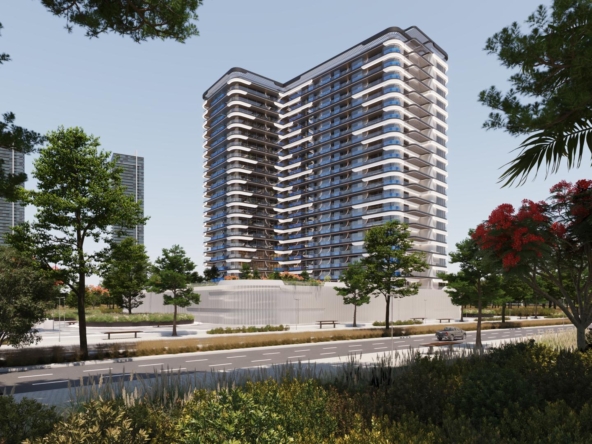
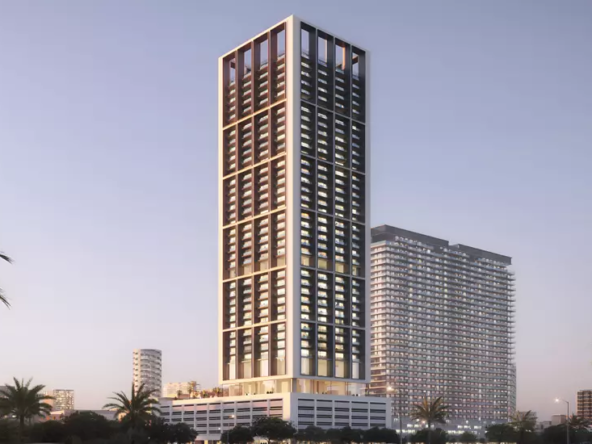
Off-plan means buying directly from a developer before or during construction, from floor plans and a show unit rather than the finished building. You pay in instalments tied to construction milestones, and you take ownership at handover — typically one to four years after you sign.
Ready (sometimes called “secondary market” or “resale”) means buying a property that’s already built and, usually, already has a title deed in someone else’s name. You can inspect it, get a snagging or building check done, and — if there’s a tenant in place — start collecting rent from settlement.
Australia’s domestic market barely has an off-plan equivalent at this scale, which is why this is usually the first genuinely new concept an Australian buyer has to get comfortable with before investing in Dubai.
Off-plan vs ready: the comparison
| Off-plan | Ready | |
|---|---|---|
| Entry price | Typically lower, especially at launch | Higher — you’re paying for a finished, income-producing asset |
| Payment structure | Staged over 1–4 years, tied to construction | Full payment (or mortgage settlement) at purchase |
| Rental income | None until handover | Immediate, if tenanted |
| Capital appreciation | Higher upside in emerging or growth corridors | Steadier, more predictable in established areas |
| What you can inspect | Show unit and floor plans only | The actual unit, building, and neighbourhood |
| Key risk | Construction delay, developer performance, market shift before handover | Overpaying for an asset whose growth has already happened |
| Financing | Developer payment plan; bank mortgages usually apply closer to handover | Standard mortgage financing available from the outset |
| Buyer protection | Escrow account under Dubai’s Law No. 8 of 2007 | Standard title transfer through the Dubai Land Department |
The case for off-plan
Lower entry cost, staged over time. Instead of one lump sum, developers spread payment across construction — often front-loaded around 10–20% at booking, smaller instalments tied to build milestones, and sometimes a post-handover plan that lets you keep paying for a year or two after you already own the unit. For a buyer sending money from Australia, that staging matters as much as the discount: it’s a multi-year commitment rather than one large transfer.
More upside in the right location. Off-plan buyers get in before an area is finished — and sometimes before it’s even fashionable. Dubai Creek Harbour is the case study everyone in this market points to: values there rose roughly 12% in early 2025 after the Dubai Metro Blue Line’s expansion was confirmed, with more re-rating expected as the line integrates fully. Buyers who bought off-plan before that announcement captured growth that ready-property buyers in the same area paid full price for afterwards.
You’re buying into 2026’s dominant market, not against it. With 71% of H1 2026 sales going off-plan and roughly AED 291.7 billion in transactions across the emirate in that half alone, off-plan isn’t a niche or risky corner of the Dubai market right now — it’s most of the market.
The case for ready property
Income starts on day one, not in three years. If cash flow is the point of the investment, a tenanted ready property starts paying you back at settlement. An off-plan purchase produces nothing until handover — plan on zero rental income for the length of the build.
What you see is what you get. You can walk the unit, check the building’s condition, verify the actual (not projected) rental rates in the building next door, and get a snagging inspection done before you commit. None of that is possible with a floor plan.
Financing is simpler. Mortgages for completed property in Dubai follow a straightforward path most banks are set up for. Off-plan financing usually only becomes available once a project reaches a certain construction stage, which limits how early you can bring debt into the purchase.
No delivery risk. The biggest single failure mode in off-plan investing — a delayed or stalled handover — simply doesn’t exist with a property that’s already built and titled.
What actually protects you if you buy off-plan
The 71% figure only makes sense once you know Dubai’s off-plan market runs on a legal structure most first-time buyers have never heard of: the escrow account.
Under Law No. 8 of 2007, every licensed off-plan project must run its buyer payments through a dedicated escrow account, controlled by an independent trustee — not the developer. Money in that account can only be spent on the project itself (land, construction, approved marketing), and it’s released to the developer in stages, only as construction milestones are verified. A developer can’t take your deposit and spend it on a different project, and in the event of serious delay, cancellation, or developer insolvency, RERA’s rules govern how buyers’ funds are protected and recovered.
It doesn’t eliminate delay risk entirely — construction timelines still slip, and “protected funds” isn’t the same as “guaranteed handover date.” But it’s the reason off-plan buying in Dubai isn’t the leap of faith it would be in a market without this structure, and it’s worth understanding before you dismiss off-plan as too risky sight unseen.
What this means specifically if you’re buying from Australia
A multi-year payment plan means multi-year currency exposure. A ready property is one AUD-to-AED conversion on one day. An off-plan payment plan spread over two or three years means your effective purchase price moves with the exchange rate at every instalment — which cuts both ways, but it’s a variable a ready-property buyer doesn’t have to think about at all.
Off-plan suits buyers who aren’t relocating soon. If you’re investing from Australia with no immediate plan to be in Dubai, the multi-year build timeline isn’t a downside — you weren’t going to use the property in year one regardless. Ready property earns its premium precisely when you want to inspect, furnish, or move into something now.
Income timing interacts with your tax position. A ready property starts generating assessable rental income (reportable on your Australian tax return, since Australia taxes residents on worldwide income) as soon as it’s tenanted. Off-plan defers that income, and the tax event that comes with it, until handover — which some investors use deliberately as a timing lever. This isn’t tax advice; talk to an accountant familiar with foreign investment income before you plan around it.
Remote due diligence looks different for each. With ready property, due diligence means verifying the building, the title, and the seller. With off-plan, it means verifying the developer’s track record and completed project history — because you can’t inspect a promise, but you can check whether this developer has delivered on time before.
A quick way to decide
Off-plan is probably the better fit if: you’re investing for capital growth over 3+ years, you don’t need rental income immediately, you’re comfortable with a staged payment plan, and you’re not planning to relocate to Dubai in the near term.
Ready property is probably the better fit if: you want rental income from day one, you’d rather inspect a real unit than a floor plan, you’re using a mortgage and want that process to be straightforward, or you’re buying with an eventual move to Dubai in mind.
Plenty of experienced investors end up holding both — ready property for income today, off-plan for growth they’re buying into early.
FAQ
Can Australians buy off-plan property in Dubai remotely, without visiting? Yes. Off-plan purchases are commonly completed remotely using a power of attorney, with payment instalments processed via international transfer. Most of the process — reservation, contract signing, payment scheduling — can be done without being in Dubai.
Is off-plan riskier than ready property in Dubai? It carries different risks, not simply more of them. Off-plan carries construction and delivery risk, offset by escrow protections under Law No. 8 of 2007. Ready property carries less delivery risk but requires more upfront capital and offers less room for early-stage price growth.
What deposit is required for off-plan property in Dubai? This varies by developer and project, but a booking deposit of around 10–20% at reservation is typical, followed by instalments tied to construction milestones through to handover.
Can Australians get a mortgage for ready property in Dubai? Yes, non-resident mortgages are available from a number of UAE banks for completed properties, typically with higher deposit requirements than for UAE residents. Off-plan financing follows a different timeline and usually becomes available only once construction reaches a set stage.
Where to go from here
Off-plan and ready aren’t a right-or-wrong choice — they’re two different ways to get exposure to the same market, and the right one depends on what you actually need this property to do for you. If you’re weighing this up as an Australian buyer, the next useful step is usually matching it against your timeline: read our guide on how Australians can buy property in Dubai for the full process, or get in touch and we’ll talk through which approach fits your goals.